


Own product · Android app
Birdy, the bird app we built and run
Birdy recognizes birds by photo and song, with a guide to 839 European species, and saves the moment in a field journal. All the AI runs on the phone, fully offline and with no account. We designed and built the app, the site, the species pages and the videos, and we run all of it ourselves.
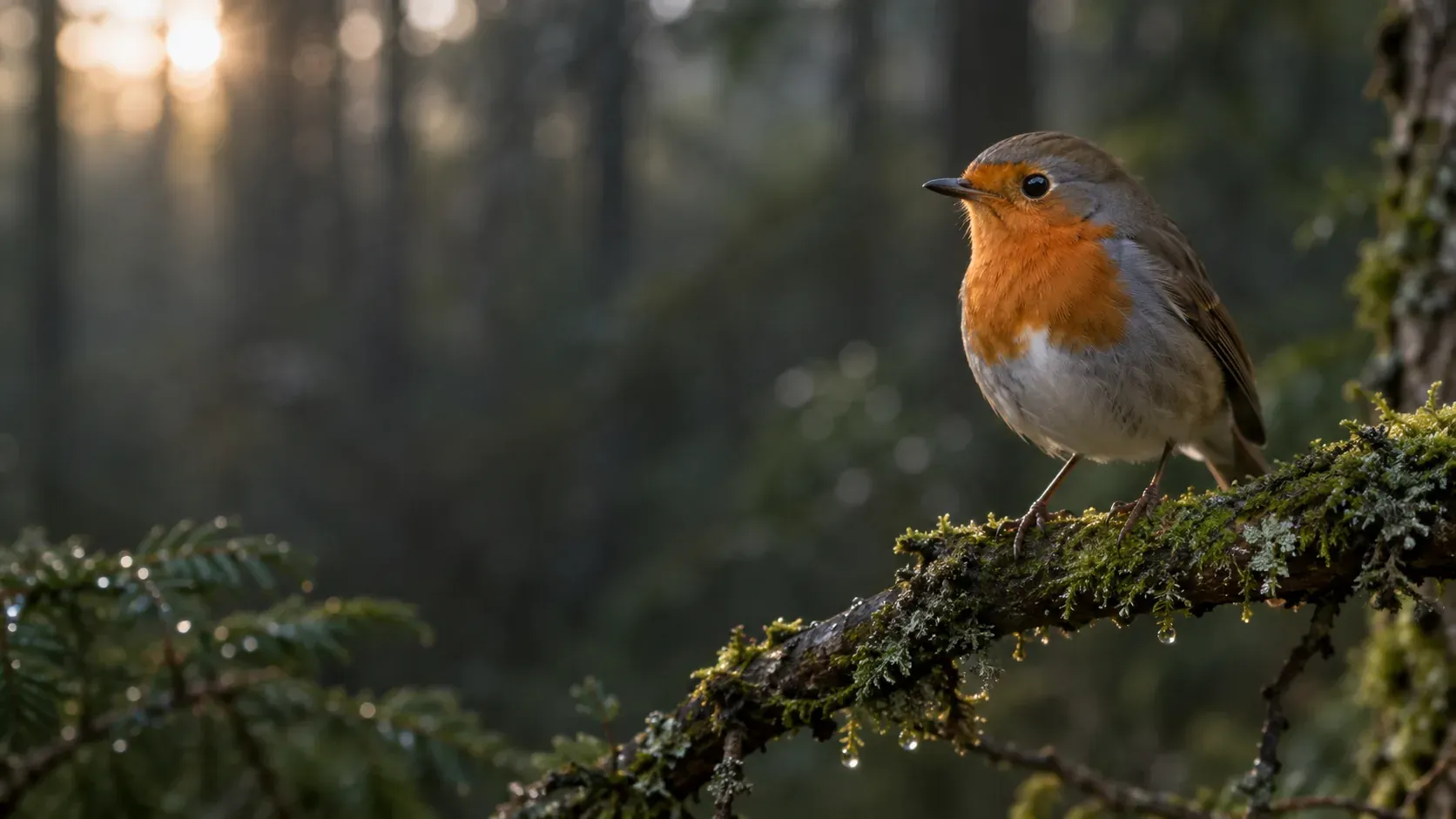
Birdy · a field journal for birds
Know the bird. Keep the moment.
A bird's name is the start of a story. Birdy gives you the name out in the forest and lets you keep where you were and what you saw.
a field journal that looks like a field journal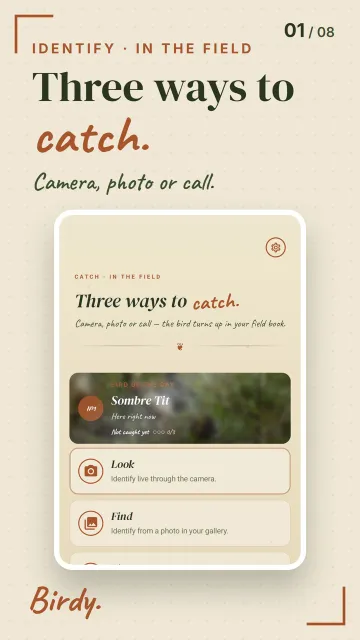
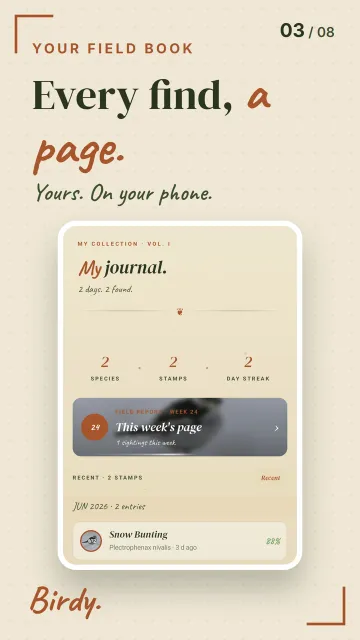
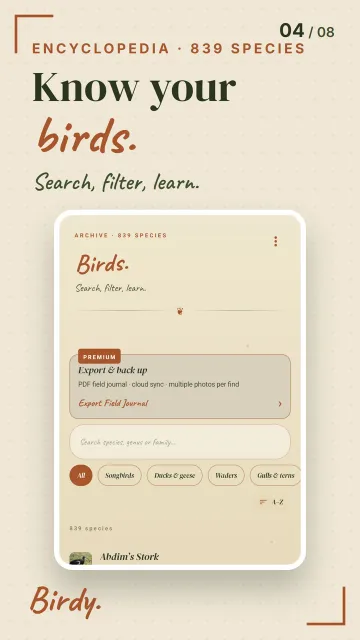
Three views from the app: identify, the field journal and the collection.
The background
Whenever we build something we start with the same question: what should the phone do that the web can't? For Birdy the answer was clear. The app has to recognize a bird from a photo or a call out in the forest, with no coverage and no account. A web page can't do that, so Birdy became a real app.
Birdy is also our own workshop. It is where we try out for real what we could otherwise only describe: AI that runs on the phone, a design that carries a whole brand, and the road from first sketch to an app on Google Play.
The app went live on Google Play in June 2026, with the field journal, the species guide and a private map of your sightings. It has its own site in Swedish and English, and an iPhone version is being built from the same codebase.
The concept
Recognize the bird
With the camera while you watch, with a photo from your gallery or with a short recording of the song. Birdy shows how sure it is.
Keep the moment
You confirm a match yourself before it is saved. Your sightings become a personal field journal to leaf through, not answers that vanish when the app closes.
Take it outside
The guide to 839 species, the pictures and the models live on the phone. Birdy works on a forest trail with no signal.
How it all fits together
Everything we do around the app leads to a species page on birdy.community. If you have Birdy on your phone, the species link opens that species straight in the app.
Ways in
- See the songEvery morning on Instagram, Facebook, YouTube and TikTok
- Google and Bing100 species pages in two languages, new pages submitted every Monday
- albit.seThis page links to birdy.community and Play
- Shared cards from the appBirdy's mark and address on every card, in the next version
 birdy.community
What the visitor gets
- The species pagePhotos, field marks, calls and Easily confused with
- The species in the appA species link opens its profile in Birdy on Android
- Google PlayThe Android app, free to download
- App StoreThe iPhone app from the same code, the next step
The links run both ways. The footer on birdy.community says "Built by AlbIT" and points here, the field note Birdy × AlbIT tells how the company and the app fit together, and the site's structured data names AlbIT AB as its publisher. From here we point back to birdy.community and Google Play. Every video post links to the bird's species page, and species pages link to each other where two birds are easy to mix up.
The species pages and the app
On birdy.community, 100 common birds have their own species page in Swedish and English, with photos, field marks and calls. The texts are written from sources such as Wikipedia and Artportalen. A second AI model checks every fact against its source, and a page is only published when all of the site's tests pass.
Every one of the app's 839 species also has a short page with its name in both languages. A test keeps the site's species list and the app's guide identical, so every species on the web is also in the app. The species pages say whether Birdy recognizes the bird by photo, by sound or both.
Where two species are easy to mix up, their pages link to each other, both ways. The bird of the day changes at midnight and is the same bird on the site and in the app.
If you have Birdy on an Android phone, a link to a species page opens that species straight in the app. If you don't, the page opens on the web, with a button to Google Play.
See the song
See the song is our video series: hear the bird first, then meet it. Each video runs about 20 seconds, is made for the phone and starts with the sound. While you listen, a ring of lines moves in time with the call, and after a short pause the bird appears with its name.
The videos are rendered from code, with photos and recordings from Wikimedia Commons under open licences, and every post credits whoever took the photo and made the recording. They're scheduled a month ahead: a new video every morning at 08.00 Swedish time since 9 October, on Instagram, Facebook, YouTube and TikTok. Every one that has gone out is on the clips page.
The flock in the pictures is Birdy's own signature: small birds that together form a larger bird, all flying the same way.
Changing the sound model
Sound ID has run on BirdNET-Lite since the start. It's a good model, but its licence is non-commercial, which doesn't fit an app with a paid tier, and it only knows 627 of the app's 839 species.
So we're moving to Perch, Google's bird sound model, under Apache 2.0. We measured both on the same recordings before deciding, and Perch was at least as accurate.
| BirdNET-Lite (today) | Perch (next version) | |
|---|---|---|
| Species with sound ID | 627 of 839 | 823 of 839 |
| Licence | Non-commercial (CC BY-NC-SA) | Apache 2.0 |
| Space on the phone | 56.7 MB model plus an extra library | 32.5 MB model, about 140 MB less in total |
On a budget Android phone, Perch listens through five seconds of sound in under half a second. The switch is built and tested in the app. Before it ships, we calibrate the thresholds on our own recordings from the field, so Birdy only says it's sure when it is.
What we built
The app, from the ground up
Built in Kotlin Multiplatform with Compose, so the same codebase carries Android today and iPhone next. Swedish and English throughout the app.
AI that runs on the phone
Both image and sound recognition run locally, sound with Google's Perch from the next version. Nothing is sent to a server to get an answer, and it works with no coverage.
A guide to 839 species
Every species has its own profile to read and browse, offline too, so the app is a field guide and not just an identifier.
A private map of your sightings
Your sightings land on a map only you can see. Photos and journal stay on the device, and no account is needed.
The site, birdy.community
Built statically in Astro in Swedish and English, with species pages, a clips page with every video and field notes on the thinking behind the app.
Premium through Google Play
Payment is handled by Google Play, and the prices come from there. People who installed Birdy early keep Premium for good.
How we work on Birdy
Birdy is built by one person, Albin, together with AI agents in Claude Code. Every part starts as a plan, is built in small steps and is reviewed twice: first against the plan, then for quality. Nothing ships until the tests pass and the part has been tried on a real phone.
Whatever repeats runs automatically, with checks at every step. The bird of the day changes at midnight, the Google Play images are rendered from code with screens captured straight from the app, every change to the code is scanned for leaked keys, the site is checked every morning and search engines hear about new pages every Monday. The decisions and the design choices are Albin's.
We use the same way of working on our clients' sites. How we build shows how.
Three choices that shaped Birdy
No account, no server
The simplest answer to where your sightings live is: with you. Running everything on the phone makes Birdy both private and useful where the coverage ends.
The app suggests, you decide
Birdy doesn't always know what you saw. It shows how sure it is and lets you check the match, so the journal only holds what you stand behind yourself.
A field journal, not a database
Paper, serif and a dash of handwriting. The design comes from the notebook you keep in your pocket, because that is the feeling the app should give.
Where Birdy stands now
- 30 April 2026
The first commit. The idea and the plan, written after midnight.
- 8 May
The phone recognizes its first bird with real AI.
- 23 May
Version 1.0 is done, 23 days after the first commit.
- 17 June
Live on Google Play with identification, field journal, species guide and private map.
- July
The iPhone app starts being built from the same code.
- 9 October
See the song starts, a video every morning.
- 10 October
Version 1.3.1: a visual lift, and Premium open to everyone for now.
- 13 October
Short species pages for all 839 species.
- 14 October
Version 1.3.2: species links open the species in the app.
- Next version
Medals, sharing species and sightings, a new intro, Perch and Premium for real.
- After that
The iPhone app in the App Store.
Field notes
On birdy.community we write about how Birdy is meant to work: the structure, the plan and why we chose what we did. Here are the latest notes.
Why Birdy exists
The thinking behind the private field journal, the offline guide and the 839 European species.
Read on birdy.community → Behind BirdyBirdy × AlbIT
The idea, how the app was built in 48 days and the goal: a real forum for everyone who loves birds.
Read on birdy.community → Behind BirdySee the song
How the video series is made and where it goes out every morning.
Read on birdy.community →Our other productAn HR tool for companies with 15 to 75 employees: a weekly check-in and material for the manager's conversations. A web app, because managers sit at a desk.
About LoopLead →Thinking about an app of your own?
Start with the question in When an app is right, or get in touch and we will tell you how Birdy was built and what it would mean for your idea.